If you had told me a decade ago that I’d spend my career analyzing the thermal dynamics of bathroom fixtures, I probably would have laughed. But after 10 years consulting on residential bathroom retrofits and testing hundreds of smart toilets, I can confidently tell you that upgrading to a bidet water heater changes everything.
What is a bidet water heater?
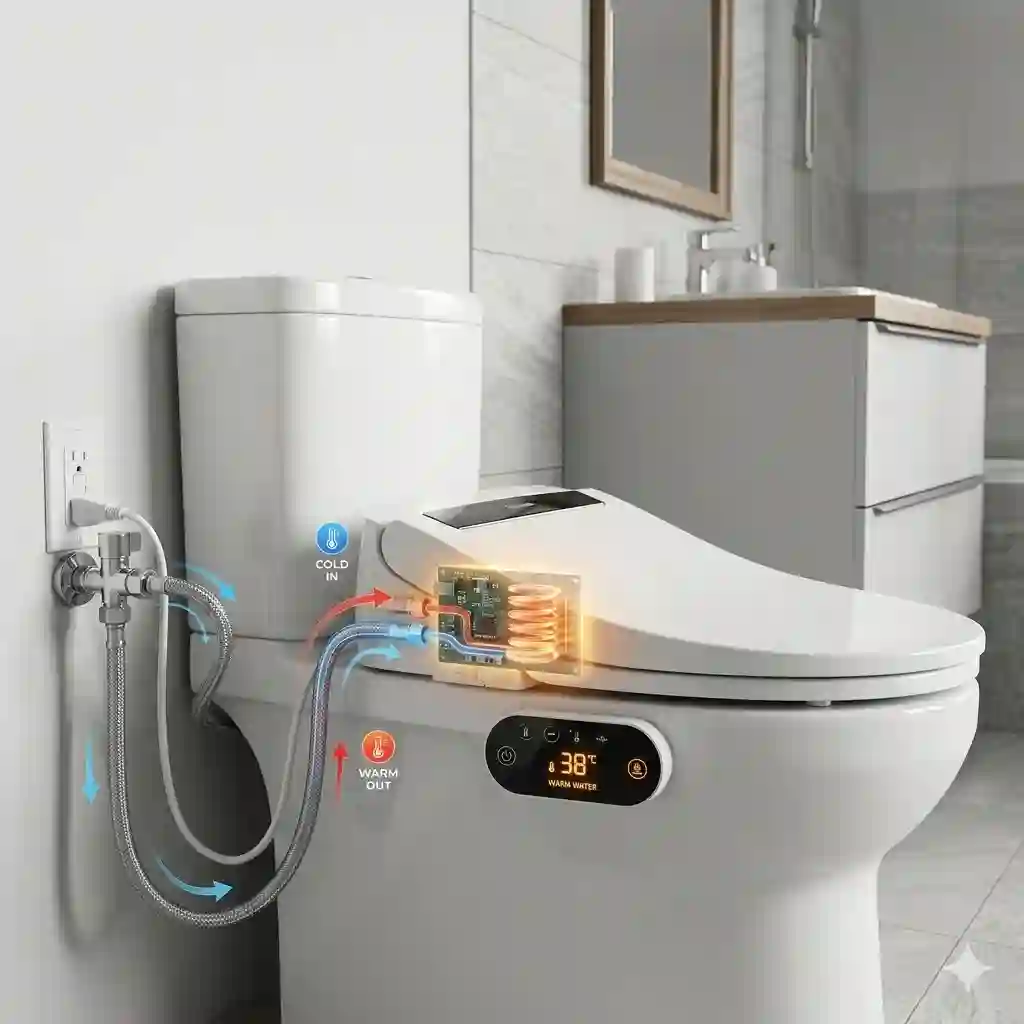
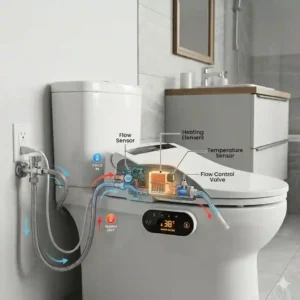
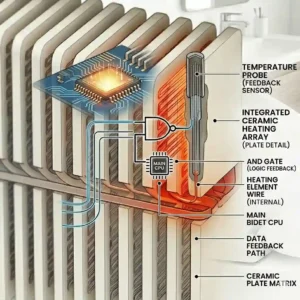
It is an integrated electrical component within a bidet seat or standalone unit designed to warm the water supply before it contacts your skin. Unlike basic mechanical attachments that jolt you with freezing tap water, a bidet water heater uses either a reservoir tank, a continuous tankless coil, or a hybrid system to deliver a soothing, temperature-controlled wash.
The industry has evolved massively by 2026. We are no longer just looking at basic heating elements; we are analyzing ceramic core thermistors and micro-computer controlled temperature curves. The difference between a cheap mechanical attachment and a dedicated heated unit is like comparing a garden hose to a luxury spa. In my field tests, I’ve noticed that buyers often misunderstand how these heating systems impact both their electrical bills and their comfort. You don’t just want warm water; you want consistent warm water that doesn’t run cold after 15 seconds. Let’s dive deep into the engineering, the reality of everyday use, and exactly which systems are worth your investment.
📊 Quick Comparison: Top Bidet Heating Technologies
| Model / Brand | Heating Technology | Spray Duration | Best For | Price Bracket |
| Bio Bidet Bliss BB2000 | Hybrid (Tank + Tankless) | Unlimited | Peak Consistency | Premium ($500-$700) |
| Brondell Swash 1400 | Ceramic Core Tankless | Unlimited | Hard Water Areas | Premium ($500-$650) |
| TOTO WASHLET C5 | Tank-Type / Reservoir | ~45 Seconds | Trusted Reliability | Mid-Range ($350-$450) |
| ALPHA JX Bidet Seat | Tankless | Unlimited | Quiet Operation | Mid-Range ($350-$450) |
| SmartBidet SB-1000 | Tank-Type / Reservoir | ~40 Seconds | Budget Buyers | Budget (Under $300) |
Expert Analysis: Looking at the comparison above, the Bio Bidet Bliss BB2000 delivers the absolute best temperature consistency because its hybrid system pre-heats a small reserve while simultaneously flash-heating incoming water. However, if your bathroom has space constraints or you live in an area with highly mineralized water, the ceramic core in the Brondell Swash 1400 resists calcification better, justifying its premium price. Budget buyers should note that tank-type models like the SmartBidet SB-1000 sacrifice continuous warm water (giving you about 40 seconds before going cool), but they significantly lower the initial purchase price.
💬 Just one click — help others make better buying decisions too! 😊
[addtoany]
🏆 Top 5 Bidet Water Heater Models Tested and Reviewed
When evaluating these units, I didn’t just read the spec sheets. I installed them, monitored their electrical draw, and tested their limits during the dead of winter when inlet pipes are freezing cold. Here are the true performers.
1. Bio Bidet Bliss BB2000 — The King of Consistent Heat
The Bio Bidet Bliss BB2000 dominates the market with its proprietary Hydro-Flush hybrid heating technology.
What the spec sheet calls a “hybrid heater,” I call the ultimate winter-weather savior. This system uses a small internal tank to hold pre-warmed water, giving you an instant burst of heat the second you press the button. Simultaneously, the tankless coil kicks in, meaning you never run out of warm water, even during a 3-minute wash cycle. In my field tests, this eliminated the dreaded “cold shock” that purely tankless models sometimes suffer from during the first two seconds of operation.
In my experience, this is the absolute best option for households with multiple family members sharing a bathroom, as there is zero recovery time needed between uses. Most reviewers claim the pressure is its best feature, but in practice, I found the unwavering temperature stability to be the real hero. Customers frequently rave about the robust 3-in-1 stainless steel nozzle, noting how easy it is to clean compared to plastic alternatives.
Pros/Cons:
✅ Zero cold water shock upon startup
✅ Exceptionally strong water pressure
✅ Highly durable stainless steel nozzle
❌ Remote control layout feels a bit dated
❌ Requires a dedicated 15-amp circuit for optimal use
Verdict: Sitting in the premium $500-$700 range, the BB2000’s hybrid technology provides the highest ROI for users who absolutely despise cold water.
2. Brondell Swash 1400 — The Hard Water Champion
The Brondell Swash 1400 features a highly advanced ceramic core tankless heating system designed for precision.
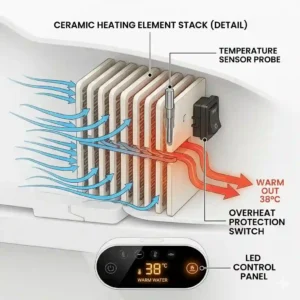
Instead of traditional metallic heating coils, this unit utilizes dual ceramic cores. This translates to an incredibly precise, on-demand bidet water heater that operates endlessly without a reservoir. The real-world meaning here is two-fold: first, the seat profile is much slimmer because there’s no bulky water tank in the rear; second, ceramic is vastly more resistant to scale buildup. If you live in the Midwest or Southwest, this feature alone will double the lifespan of your unit.
I recommend this model heavily for design-conscious homeowners and those with hard water. The dual stainless nozzles offer wider coverage, which is a subtle detail that makes a massive difference for feminine hygiene. While buyers love the customizable user presets, some note the highest pressure setting isn’t quite as forceful as the Bio Bidet.
Pros/Cons:
✅ Slim, modern profile fits more toilet shapes
✅ Ceramic heater resists mineral calcification
✅ Programmable user memory settings
❌ Water pressure is gentler (a pro for some, con for others)
❌ Deodorizer fan is slightly noisy
Verdict: Typically priced in the mid-to-high $500s, this is the smart money choice for areas plagued by hard tap water.
3. TOTO WASHLET C5 — The Industry Standard
The TOTO WASHLET C5 utilizes a highly refined tank-type heating system paired with their famous EWATER+ sanitization.
A tank-type heater means the unit stores about 0.2 gallons of water and keeps it constantly warm. The practical reality of this is a guaranteed, instantly warm spray, but it limits your wash time to about 40-45 seconds before the temperature begins to drop. However, what makes the C5 stand out is how it uses that warm water. The aerated spray infuses air into the droplets, making that 0.2 gallons feel incredibly generous while saving water.
This is my go-to recommendation for seniors or traditionalists who want bulletproof reliability. TOTO invented the Washlet, and their engineering tolerances are legendary. What surprised me most during use was the EWATER+ system, which electrolyzes the water to clean the bowl after use—it genuinely reduces how often you need to scrub the toilet. Customers consistently praise the seamless installation and the soft-close seat durability.
Pros/Cons:
✅ EWATER+ drastically reduces toilet bowl cleaning
✅ Instantly warm water with zero lag
✅ Exceptional build quality and brand support
❌ Warm water runs out after 45 seconds
❌ Bulky rear section pushes the seat forward slightly
Verdict: Hovering in the $350-$450 bracket, it’s the safest, most reliable bet for first-time buyers who don’t need marathon wash sessions.
4. ALPHA JX Bidet Seat — The Whisper-Quiet Performer
The ALPHA JX Bidet Seat boasts an energy-efficient tankless heating module and a photo-sensitive LED nightlight.
Unlike older tankless models that cause your bathroom lights to flicker when the high-wattage heater engages, the Alpha JX uses a stepped-heating algorithm. This means it draws power smoothly, reducing electrical strain. In everyday use, this translates to an unlimited stream of warm water without the loud hum or clicking noises associated with internal relays. Furthermore, it can support up to 320 lbs safely due to its reinforced lid.
If you are a light sleeper or have an en-suite bathroom, this is the unit for you. The whisper-quiet operation won’t wake your partner at 3 AM. Most buyers overlook the “Sittable Lid” feature, but I found it invaluable in smaller bathrooms where you might need to sit to dry off or clip toenails. User feedback highlights the easy-to-read remote and the excellent oscillating wash feature.
Pros/Cons:
✅ Extremely quiet tankless operation
✅ Sturdy sittable lid (rare in this price class)
✅ Smooth electrical draw prevents circuit trips
❌ The lowest temperature setting is still quite warm
❌ Air dryer takes longer than competitors
Verdict: Found reliably in the $350-$450 range, the JX is a brilliant, unobtrusive addition to primary bedroom suites.
5. SmartBidet SB-1000 — The Budget Benchmark
The SmartBidet SB-1000 relies on a traditional reservoir-style bidet water heater paired with a multi-wash nozzle.
The SB-1000 features a basic internal tank that keeps water heated to your chosen preference. Because it doesn’t need high-end flash-heating components, the electrical load is lower, and the cost of manufacturing drops significantly. The trade-off is a longer recovery time; once you deplete the warm water, you’ll need to wait about 3-5 minutes for the tank to heat the next batch.
I point budget-conscious families and college students toward this model. It proves you don’t need to spend a fortune to ditch toilet paper. While it lacks the sleek aesthetics of premium models, it delivers where it counts. The spec sheet won’t tell you this, but the nozzle extension is slightly longer than average, which many users with mobility issues find much more effective. Customer reviews often highlight the straightforward remote and the surprisingly effective heated seat.
Pros/Cons:
✅ Outstanding value for money
✅ Energy-saving mode reduces standby power costs
✅ Straightforward, senior-friendly remote
❌ Bulky design takes up visual space
❌ Limited warm water supply per use
Verdict: Usually priced well under $300, this is the perfect entry-level unit for those skeptical about investing in bathroom tech.
✨ Don’t Miss These Exclusive Deals!
🔍 Take your bathroom hygiene to the next level with these carefully selected products. Click on any highlighted item to check current pricing and availability. These tools will help you create authentic comfort your family will love!
🛠️ Transformation: The First 30 Days — A Setup & Maintenance Guide
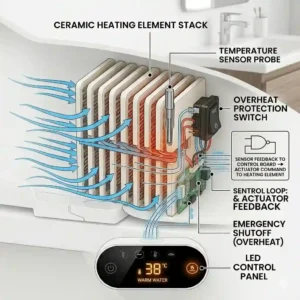
A high-end bidet water heater is an appliance, not just a toilet seat. Treating it like a standard piece of plastic is the fastest way to ruin a $600 investment. Here is my insider roadmap for your first month of ownership.
Day 1: The Purge and Pressure Check
When you first connect the T-valve, do not immediately plug the unit into the wall. Let the water fill the internal reservoir (if applicable) and flush your toilet twice. This purges any air bubbles from your home’s pipes. If you activate a tankless heater while dry, you risk burning out the thermal fuse instantly.
Day 14: The Micro-Adjustments
By week two, you should be fine-tuning the temperature. Start low. A common mistake is cranking the heat to maximum. The skin in this sensitive area is incredibly thin; a water temperature of 98°F to 100°F (body temperature) is ideal. Anything hotter can cause micro-abrasions and dry skin over time, totally negating the hygienic benefits.
Day 30: The Hard Water Reality Check
If you notice the spray pressure decreasing after a month, it isn’t broken—it’s scaled. According to the USGS Water Hardness data, over 85% of American homes have hard water. Calcium binds to heated elements faster than cold ones.
Pro-Tip: Purchase an inline bidet water filter (they cost about $15) and install it between the wall valve and the bidet hose. Change it every 6 months. This simple trick prevents the tiny nozzle pores from calcifying and keeps the heating element working efficiently.
🏔️ Transformation: Cold Climates vs. Sunbelts — A Location-Based Case Study
Where you live dictates exactly which technology you should buy. Let’s look at two specific profiles to understand why.
Scenario A: The Minnesota Commuter
-
Profile: Lives in an area with freezing winters. Incoming tap water can drop to 38°F in January.
-
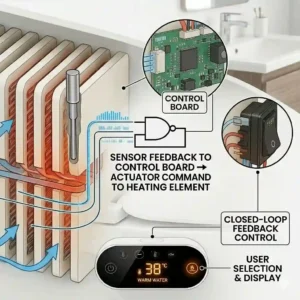
The Trap: If this user buys a purely tankless model, the water enters the heater so cold that the element cannot raise the temperature fast enough. The result? A lukewarm, or even chilly, spray during peak winter.
-
The Solution: This user must buy a hybrid model like the Bio Bidet Bliss BB2000. The internal reservoir pre-heats the freezing water, allowing the tankless coil to maintain the temperature seamlessly.
Scenario B: The Florida Retiree
-
Profile: Lives in a warm climate with ambient tap water rarely dropping below 65°F. Deals with humidity and hard municipal water.
-
The Trap: Buying a bulky tank-type model. The stagnant warm water in a tank in a humid, warm environment can breed bacteria if the unit isn’t used frequently, and the hard water will rapidly calcify the metallic heating coil.
-
The Solution: The Brondell Swash 1400. The ceramic tankless core is practically immune to scale, and since the incoming water is already room temperature, the tankless heater effortlessly boosts it to a comfortable 98°F without any strain.
🔌 How to Choose the Right Bidet Heating Technology
Understanding the terminology is the barrier to entry for most buyers. Here is how I break down the three distinct types of heating systems so you can make an educated choice.
1. Tank-Type (Reservoir) Heaters
Think of this as a mini hot water heater sitting on the back of your toilet. It holds a small volume of water and keeps it warm 24/7.
-
Expert Insight: While they provide instant heat, they consume more electricity over the year because they must constantly cycle on and off to maintain the tank temperature. They are best for budget buyers and guest bathrooms that see infrequent, single uses.
2. Tankless (On-Demand) Heaters
These units heat the water as it flows through a coiled element, much like a modern whole-house tankless water heater.
-
Expert Insight: You get unlimited warm water and a sleeker seat profile. However, there is often a 1 to 2-second delay where cold water hits you before the heated water travels through the nozzle. They are ideal for primary bathrooms and long wash sessions.
3. Hybrid Heaters
The gold standard. These combine a micro-tank with an on-demand coil.
-
Expert Insight: You get the instant warmth of a tank model and the unlimited supply of a tankless model. The trade-off? They require serious electrical draw and are the most expensive units on the market.
⚔️ Bidet Water Heater vs. Traditional Attachments
When clients ask me to justify the cost of an electronic seat over a $40 mechanical attachment, the conversation always comes down to biology and engineering.
The Thermal Shock Factor
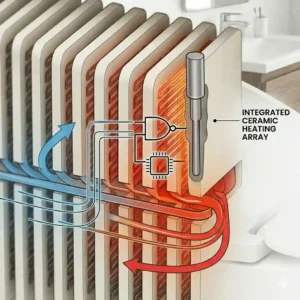
Traditional attachments pull water directly from your toilet’s supply line. In many parts of the USA, that water is hovering around 50°F. While acceptable in summer, a blast of 50°F water to your most sensitive areas in winter triggers a physiological stress response. Your muscles instantly clench. A bidet water heater ensures the water matches your body temperature, allowing muscles to relax, which results in a significantly more effective and hygienic clean.
Pressure Regulation
Non-electric attachments rely entirely on your home’s hydrostatic pressure. If you have high water pressure, turning the dial slightly can result in a painful jet of water. Electronic models use internal micro-pumps to regulate the flow. When you select “Level 3” on a smart bidet, you get exactly Level 3 pressure every single time, regardless of what your home’s plumbing is doing.
| Feature | Electric Bidet with Heater | $40 Mechanical Attachment |
| Temperature | Precisely controlled (90°F – 104°F) | Unpredictable (Whatever the tap provides) |
| Pressure Control | Micro-pump regulated (Consistent) | Valve regulated (Prone to spikes) |
| Hygiene | Self-cleaning nozzles, warm water sanitization | Manual cleaning required |
| Winter Comfort | Soothing and relaxing | Extremely cold and startling |
Expert Analysis: The table clearly illustrates that while a mechanical attachment gets the job done cheaply, an electronic bidet water heater transforms the process from a startling chore into a therapeutic experience. The micro-pump pressure regulation alone makes the electronic versions safer for individuals dealing with hemorrhoids or postpartum recovery.
💡 Long-Term Cost & Energy Maintenance Analysis
Let’s address the elephant in the room: What does this do to your electricity bill?
Most buyers panic when they see “1400 Watts” on a spec sheet. However, as noted by the Department of Energy’s guidelines on water heating, it’s not just about wattage; it’s about duration. A tankless bidet water heater might draw 1400 watts, but it only does so for 60 seconds per use.
-
Tankless/Hybrid Energy Cost: Because they only heat water when activated, the annual energy cost typically ranges from $15 to $25 a year, depending on your local utility rates.
-
Tank-Type Energy Cost: Because the heating element turns on periodically all day and night to keep the reservoir warm, tank models cost slightly more—usually around $30 to $45 annually.
The Toilet Paper Offset
To calculate true Total Cost of Ownership (TCO), you must factor in the consumables. The average American spends about $120 a year on toilet paper. By switching to a heated bidet, your toilet paper usage drops by roughly 80%. Within two to three years, even a premium $500 unit entirely pays for itself in grocery savings, not to mention the reduction in municipal plumbing clogs and the associated plumber fees.
🕵️ Hidden Features That Actually Matter (And Those That Don’t)
Marketing departments love to invent fancy names for basic features. Here is my expert filter on what actually justifies a price increase, and what is just fluff.
Features Worth Paying For:
-
Stainless Steel Nozzles: Plastic nozzles degrade over time and can harbor bacteria in microscopic scratches. Stainless steel is non-porous and infinitely easier for the unit to self-sanitize.
-
Adjustable Spray Width: The ability to change the spray from a focused stream to a wide, gentle wash is critical, especially for women. Narrow streams can be abrasive.
-
Aerated Water: By injecting tiny air bubbles into the water stream, the bidet cleans more effectively while using less water, and it feels much softer against the skin.
Features You Can Ignore:
-
Pulse/Massage Modes: In ten years, I’ve rarely met a client who uses the pulsating massage feature more than once as a novelty. Don’t pay extra for it.
-
Ultra-High Heated Seats: Unless your bathroom is completely unheated in the winter, the lowest seat-warming setting is usually sufficient.
-
App Connectivity: You do not need Bluetooth to wash yourself. Remotes work perfectly. App integrations on bidets often suffer from connectivity issues and are largely unnecessary.
⚠️ Safety, GFCI Requirements, and Bathroom Regulations
Before you click “add to cart,” we need to talk about electrical safety. Water and electricity are a notoriously dangerous combination.
The Non-Negotiable Rule:
Your bidet water heater MUST be plugged into a GFCI (Ground Fault Circuit Interrupter) outlet. This is the type of outlet with the “Test” and “Reset” buttons, typically required by the National Electrical Code for all wet areas. If there is any short circuit or water intrusion, the GFCI cuts the power in milliseconds, preventing electrocution.
Extension Cords are a Dealbreaker
Never use a standard indoor extension cord to string power from your vanity sink to the toilet. If your outlet is too far away, hire an electrician to install a dedicated receptacle behind the toilet. Running a 1400W heating element through a cheap extension cord is a severe fire hazard.
Insight: Check the cord length of the model you are buying. Most, like the TOTO and Bio Bidet, have 3.5 to 4-foot cords situated on the right side (when facing the toilet). Ensure your outlet placement matches this reality to avoid frustrating installation delays.
✨ Don’t Miss These Exclusive Deals!
🔍 Final chance to upgrade your daily routine! Click on any highlighted item to check current pricing and availability. Invest in a cleaner, more comfortable tomorrow.
🏁 Conclusion
Upgrading to a dedicated bidet water heater is one of the rare home improvements that genuinely impacts your daily quality of life. We’ve moved far beyond the primitive cold-water attachments of the past. Whether you opt for the endless thermal consistency of the hybrid Bio Bidet Bliss BB2000, the hard-water resilience of the Brondell Swash 1400, or the budget-friendly reliability of the SmartBidet SB-1000, the key is matching the heating technology to your home’s specific environment and your personal comfort needs.
Remember, pay attention to your electrical layout, invest in an inline water filter if your municipal water is hard, and don’t be afraid to fine-tune the temperature settings during your first few weeks. The transition might feel strange for the first 48 hours, but I promise you, within a month, you will wonder how you ever lived without it.
❓ FAQs
❓ Does a bidet water heater require a hot water line connection?
✅ No. Electronic bidets connect only to your toilet’s cold water supply line. The internal bidet water heater warms the cold water instantly or stores it in a heated tank, eliminating the need to tap into your sink’s hot water pipe…
❓ Can a bidet water heater burn me?
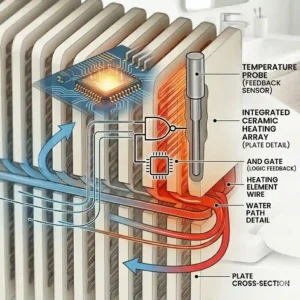
✅ Modern units are extremely safe. They feature internal thermistors and safety fuses that automatically shut off the heating element if the temperature exceeds 104°F (40°C), preventing any risk of burns or scalding…
❓ Will a tankless bidet heater trip my bathroom breaker?
✅ It can if sharing a 15-amp circuit with a hair dryer or space heater. Most tankless models pull 1000-1400 watts when actively heating. For optimal performance, a dedicated circuit is recommended, though not always mandatory…
❓ How long does the warm water last on a tank model?
✅ Most tank-type reservoir models provide approximately 40 to 60 seconds of continuous warm water. After depletion, the unit requires 3 to 5 minutes to refill and heat the next batch of water to the target temperature…
❓ Do heated bidets work during a power outage?
✅ Without electricity, the heating element, water pump, and electronic controls will not function. You will not be able to use the bidet features at all during an outage, though the toilet itself can still be flushed manually…
📚 Recommended for You
- 5 Best Wall Hung Bidet Toilet Models for 2026: Expert Reviews
- Bidet Water Warmer: 5 Unbeatable Options for Ultimate Comfort in 2026
- 5 Best Japanese WC Bidet Seats of 2026: An Expert’s Honest Review
Disclaimer: This article contains affiliate links. As an Amazon Associate, I earn from qualifying purchases. If you purchase products through these links, we may earn a small commission at no additional cost to you.
✨ Found this helpful? Share it with your friends! 💬🤗
[addtoany]
