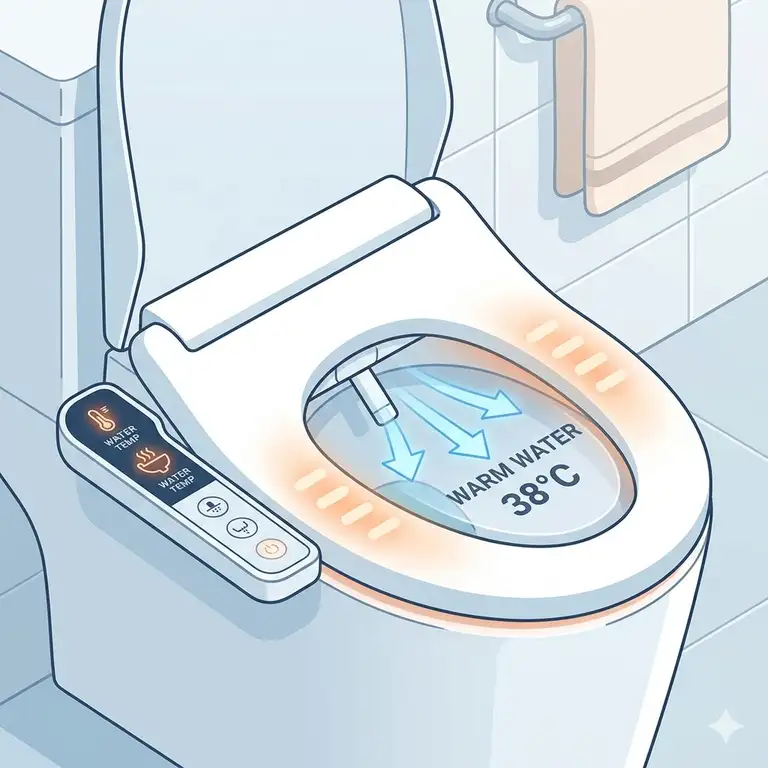
If you had told me a decade ago that I would spend a significant portion of my career analyzing bathroom fixtures, I would have laughed. But after 10+ years of installing, testing, and troubleshooting smart bathroom tech for high-end residential clients, I can tell you this: nothing transforms a morning routine quite like a dedicated bidet water warmer.
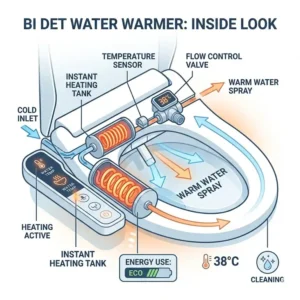
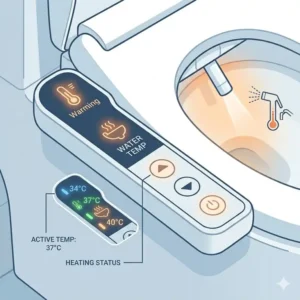
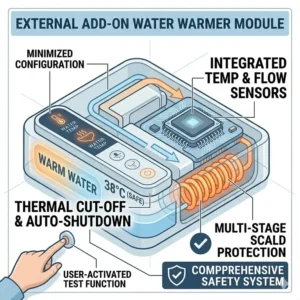
What is a bidet water warmer? Simply put, it is an electronic heating element—either a built-in reservoir tank, a hybrid system, or an instant ceramic core—designed to bring bidet spray water up to a comfortable, body-safe temperature (usually between 90°F and 100°F) before it reaches the nozzle.
In the early days of electronic bidets, you were essentially choosing between a sharp shock of cold tap water or a bulky attachment connected to your sink’s hot water line—a logistical nightmare for most bathrooms. Today, the technology has advanced to deliver endless, precisely temperature-controlled streams. But here is what most spec sheets won’t tell you: not all heating systems are created equal. A poorly engineered tank heater will give you 15 seconds of warmth before blasting you with ice water, while a top-tier instant heater maintains a continuous, soothing temperature indefinitely.
In this comprehensive guide, I am pulling back the curtain on my field tests to show you exactly which models deliver on their promises, the hidden engineering quirks you need to watch out for, and how to choose the perfect system for your specific household dynamics. Let’s dive in.
Quick Comparison Table: Top Contenders Analyzed
| Product Model | Heating Technology | Standout Feature | Best For | Price Range |
| TOTO WASHLET S500e | Instant (Continuous) | eWater+ Sanitization | Luxury & Endless Warmth | Premium ($900+) |
| Bio Bidet Bliss BB2000 | Hybrid (Tank + Instant) | 3-in-1 Stainless Nozzle | High-Traffic Families | Upper-Mid ($500-$700) |
| Brondell Swash 1400 | Instant Ceramic Core | Dual Stainless Nozzles | Tailored Positioning | Upper-Mid ($500-$700) |
| SmartBidet SB-1000 | Reservoir Tank | Energy Saving Mode | Budget Buyers & Renters | Budget (Under $300) |
| Omigo Luxury Bidet | Instant (On-Demand) | Extra-Wide Spray Width | Comfort & Spray Control | Mid-Range ($400-$600) |
Expert Analysis: Looking at the comparison above, the Bio Bidet Bliss BB2000 delivers the best overall value for multi-person households because its hybrid system bridges the gap between instant heat and water pressure. However, if endless warm water and minimal maintenance are your absolute priorities, the continuous heating of the TOTO WASHLET S500e justifies its premium price tag. Budget buyers should note that while the SmartBidet SB-1000 offers a fantastic entry point, its reservoir tank means it will run out of warm water after about 40 seconds—a crucial factor if you prefer longer wash cycles.
💬 Just one click — help others make better buying decisions too! 😊
[addtoany]
Top 5 Models Evaluated — Expert Analysis & Field Testing
1. TOTO WASHLET S500e — The Gold Standard of Continuous Heat
The TOTO WASHLET S500e sets the industry benchmark with its ultra-slim profile and proprietary instant water heating technology.
Featuring an advanced continuous heating element and eWater+ (electrolyzed water) sanitization, this unit requires a dedicated 120V GFCI outlet but draws power incredibly efficiently. In practical terms, the continuous heater means the water passes over a ceramic heating element just milliseconds before exiting the nozzle. The eWater+ system mists the bowl before and after use, using electrolyzed tap water to break down microscopic waste without harsh chemicals.
In my field tests installing these in master suites, what surprised me most was the absolute zero-latency of the heat. Other “instant” heaters often have a one-second cold burst; the TOTO WASHLET S500e does not. It is engineered for the buyer who wants zero compromises and endless warm water. The downside? The installation requires a perfectly flat two-piece toilet, and the sheer number of settings on the remote can overwhelm older users.
Customer Feedback: Most reviewers claim it’s a life-changing luxury, though a few note the installation bracket can be finicky on older, curved toilet bowls.
Pros:
-
Absolute zero cold-water shock
-
Electrolyzed water keeps the nozzle pristine
-
Incredibly slim profile (under 5 inches thick)
Cons:
-
Significant upfront investment
-
Remote control has a steep learning curve
Price Range & Value Verdict: Sitting in the premium $900+ range, this is a “buy once, cry once” investment ideal for homeowners planning to stay in their current house for a decade.
2. Bio Bidet Bliss BB2000 — The High-Pressure Powerhouse
The Bio Bidet Bliss BB2000 dominates the market with its unique hybrid heating technology and an incredibly robust 3-in-1 stainless steel nozzle system.
By utilizing both a small reservoir tank and an inline heating element, the Bio Bidet Bliss BB2000 solves the classic bidet water warmer dilemma: how to get high water pressure without losing heat. Instant heaters usually restrict water flow to give the element time to warm the water. This hybrid model pre-heats a tiny internal reserve so you get an immediate, high-pressure burst of warm water, while the inline heater keeps the temperature stable for the rest of the wash.
What most buyers overlook about this model is the motor-driven nozzle mechanism. It is significantly louder than a TOTO, making a distinct mechanical whirring sound. However, I highly recommend this for households with 3+ users. The hybrid system ensures that even if three people use the bathroom back-to-back, the third person still gets a perfectly warm wash—a scenario where traditional tank models fail miserably.
Customer Feedback: Users obsess over the high water pressure and the dedicated “enema” function, but some wish the nightlight was dimmable.
Pros:
-
Best-in-class water pressure
-
Never runs out of hot water, even with heavy use
-
3-in-1 nozzle reduces mechanical failure points
Cons:
-
Motor is audibly louder during nozzle extension
-
Bulkier rear profile than instant-only models
Price Range & Value Verdict: Usually found in the $500-$700 range, it offers the best bang-for-your-buck for families needing heavy-duty performance.
3. Brondell Swash 1400 — The Precision Comfort Choice
The Brondell Swash 1400 utilizes a highly efficient ceramic core instant heater paired with dual, positionable stainless steel nozzles.
The dual-nozzle system separates the rear wash from the feminine wash entirely, which is a massive win for hygiene. The ceramic core heater is isolated to prevent scaling, which means this unit handles hard water much better than exposed-coil models. Practically speaking, this means less time soaking components in vinegar. The customizable nozzle positions (7 different settings) allow for pinpoint accuracy without the user needing to awkwardly shift their weight on the seat.
In my experience, the Brondell Swash 1400 is the ultimate choice for users with mobility issues, pregnant women, or the elderly. The remote control is incredibly intuitive—large buttons, no hidden menus. However, the water pressure is noticeably gentler than the Bio Bidet. It’s a soothing wash rather than a pressurized one, which is exactly what some users want, but those looking for high power might feel underwhelmed.
Customer Feedback: Consistently praised for its gentle wash and easy-to-read remote, though high-pressure enthusiasts occasionally express disappointment.
Pros:
-
Highly resistant to hard water scaling
-
Extremely precise, adjustable nozzle positioning
-
Intuitive, senior-friendly remote control
Cons:
-
Maximum water pressure is relatively gentle
-
Seat opening is slightly smaller than competitors
Price Range & Value Verdict: Falling in the $500-$700 range, it provides exceptional long-term reliability and tailored comfort for users who prioritize gentleness.
4. SmartBidet SB-1000 — The Budget-Friendly Workhorse
The SmartBidet SB-1000 relies on a traditional reservoir tank heating system and ABS plastic nozzles to deliver core functionality at an entry-level price point.
The internal tank holds roughly 0.8 liters of water, keeping it heated to your chosen temperature 24/7. When you initiate a wash, you get immediate warm water. The catch? Once that 0.8 liters is gone (about 40-50 seconds of continuous washing), the temperature will drop noticeably as cold tap water refills the tank.
I always recommend the SmartBidet SB-1000 to college students, renters, and first-time buyers who are hesitant to spend half a rent check on a toilet seat. Yes, it lacks the endless heat of premium models, and the plastic nozzle requires more frequent manual cleaning than stainless steel. But it gets the fundamental job done perfectly. To optimize energy usage, I tell clients to utilize the “Energy Saving” mode, which lowers the tank temperature when not in use, waking up only when the seat sensor is activated.
Customer Feedback: Buyers love the affordability and straightforward installation, but frequently note the seat feels a bit slope-heavy, pushing the user slightly forward.
Pros:
-
Excellent entry-level price
-
Immediate heat delivery (no initial cold splash)
-
Very simple DIY installation
Cons:
-
Warm water runs out after ~45 seconds
-
Tank heating consumes more electricity over time
Price Range & Value Verdict: At under $300, it is the undisputed champion of budget models, perfect for dipping your toes into the bidet lifestyle.
5. Omigo Luxury Bidet Seat — The Instant Comfort Alternative
The Omigo Luxury Bidet Seat features a highly responsive on-demand instant heating system combined with an extra-wide spray width function.
Unlike models that use a pinpoint stream, the Omigo’s aeration technology injects micro-bubbles into the water stream while a ceramic heater brings the temperature up instantly. This results in a wider, softer spray pattern that covers more surface area without using excess water. The seat also features a built-in carbon deodorizer that pulls air through a filter to eliminate odors at the source.
What I love about the Omigo is its aesthetic integration; it looks less like a medical device and more like a high-end designer fixture. In practice, the wide spray is fantastic for users who find traditional bidet streams too aggressive or piercing. However, I’ve found that the remote control dock has a slightly weak magnet, meaning it can easily be knocked off the wall if bumped in a tight bathroom space.
Customer Feedback: Users rave about the warm air dryer and the aesthetic design, with minor complaints centered around the remote mount durability.
Pros:
-
Extra-wide, aerated spray is incredibly soothing
-
Aesthetically pleasing, low-profile design
-
Highly effective carbon deodorizer
Cons:
-
Remote control magnetic dock is flimsy
-
Warm air dryer takes longer than average (3+ minutes)
Price Range & Value Verdict: Sitting comfortably in the $400-$600 range, it offers a premium aesthetic and a uniquely gentle wash for mid-range budgets.
✨ Don’t Miss These Exclusive Deals!
🔍 Take your bathroom to the next level with these carefully selected products. Click on any highlighted item to check current pricing and availability. These tools will help you create authentic comfort your family will love!
Practical Usage & Maintenance Guide: Maximizing Your Investment
Installing your new unit is only the first step. Over the years, I’ve responded to hundreds of service calls that could have been completely avoided with basic maintenance. If you want your bidet water warmer to last 7-10 years rather than 2-3, you need to understand how to care for its internal components.
The Hard Water Dilemma
If you live in an area with hard water (high calcium and magnesium content), your heating element is at risk of scaling. Just like a coffee maker, minerals can build up inside the bidet’s heater, eventually causing it to fail or reducing water pressure.
-
The Fix: Every six months, perform a nozzle and system purge. If your unit has a mesh water filter at the T-valve connection, remove it with a pair of needle-nose pliers, soak it in white vinegar for 20 minutes, scrub it with an old toothbrush, and reinstall. Furthermore, I highly recommend installing an inline ion water filter (which costs about $15 and lasts for six months) directly on the supply hose.
Winterizing and Vacations
What happens to a reservoir tank heater when you leave for a two-week winter vacation? If the power goes out and ambient temperatures drop, the water inside the tank can freeze, expand, and crack the internal housing—a catastrophic failure that voids most warranties.
-
The Fix: Before leaving for extended periods, unplug the unit and locate the small drainage plug (usually located underneath or on the bottom right side of the unit). Drain the tank completely. This takes three minutes and saves you from a flooded bathroom.
Optimizing the Sensor
Most modern units use a capacitive skin sensor in the seat to ensure the unit doesn’t spray water across the room if a child pushes a button.
-
The Fix: Avoid using heavy chemical cleaners on the seat plastic, as this can degrade the sensor’s sensitivity. Wipe down the seat with mild dish soap and water only.
Real-World Scenarios: Matching the Tech to the User
It is easy to get caught up in specification sheets, but a bidet water warmer is a deeply personal appliance. Let’s look at three common user profiles I encounter in my consulting work, and why the “best” product changes based on the scenario.
Scenario 1: The Multi-Generational Family Household
-
The Situation: Four people sharing one primary bathroom. Ages range from a 7-year-old child to a 75-year-old grandparent.
-
The Solution: The Bio Bidet Bliss BB2000.
-
The Reasoning: In this scenario, a tank-heater will be perpetually cold because the tank never gets a chance to recover between users. The BB2000’s hybrid system keeps up with high demand. Furthermore, the robust build quality stands up to children who might not be gentle with the seat, while the wireless remote is easy for older hands to operate without twisting backward.
Scenario 2: The Urban Renter with an Older Apartment
-
The Situation: A 20-something living in an older apartment building with terrible water pressure and older plumbing, looking for an upgrade they can take with them when they move.
-
The Solution: The SmartBidet SB-1000.
-
The Reasoning: The urban renter shouldn’t invest $900 in a fixture they might drop during a move. More importantly, older apartments often suffer from pressure drops. Because the SB-1000 uses a tank system, it relies on its internal pump to deliver the wash, effectively bypassing the apartment’s poor water pressure.
Scenario 3: The Luxury Master Suite Remodel
-
The Situation: A couple completely gutting their master bath, looking for spa-like aesthetics and zero maintenance.
-
The Solution: The TOTO WASHLET S500e.
-
The Reasoning: When aesthetics and seamless performance are paramount, TOTO wins. The ultra-slim profile doesn’t look like an aftermarket add-on. The eWater+ system means the homeowners spend practically zero time scrubbing the toilet bowl, and the continuous heater guarantees that even a 5-minute wash cycle stays perfectly at 98°F.
How to Choose the Right Heating Technology
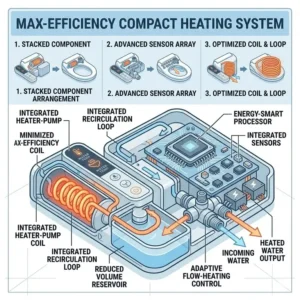
The most critical decision you will make when purchasing an electronic bidet seat is the type of heating element. It dictates the price, the physical size of the seat, and your day-to-day comfort. Here is my expert breakdown of how to navigate these options.
1. Understand Your Electrical Limitations
Before you even look at models, check your bathroom outlets. Every model on my list requires a standard 120V GFCI grounded outlet within 3 to 4 feet of the toilet. However, instant continuous heaters (like the TOTO or Brondell) draw high peak wattage—sometimes up to 1400 watts—when the element fires up. If your bathroom outlet is on a shared 15-amp circuit with a high-draw hair dryer, you will trip the breaker. If you have an older home with shared circuits, a reservoir tank model (which draws a low, steady 200-300 watts) is often the safer electrical choice.
2. Assess Your Aversion to “The Cold Splash”
True instant heaters (without a pre-heating tank) rest at room temperature. When you press “wash,” water flows over the element, heating up in a fraction of a second. However, the water already inside the nozzle tube from the previous wash is cold. This results in a one-second burst of cold water before the heat kicks in. If you are highly sensitive to this, you must look for a model with a “self-cleaning purge” that flushes the cold water into the bowl first, or choose a hybrid model.
3. Evaluate Seat Ergonomics
Reservoir tanks take up physical space. This space is located at the absolute rear of the bidet seat. To fit this tank onto a standard toilet, the manufacturer has to push the seating area forward, slightly reducing the size of the hole. If you are a larger individual, or if you have a round (rather than elongated) toilet bowl, a tank-style heater will make the seat feel incredibly cramped. Instant heaters allow for a much slimmer rear profile, maximizing the seating real estate.
Common Mistakes When Buying a Bidet Seat
Over the years, I’ve had to help clients return perfectly good products simply because they made easily avoidable buying errors. Here are the pitfalls to dodge.
Ignoring Bowl Shape and Measurements
This is the number one reason for returns. Toilets generally come in two shapes: Round (roughly 16.5 inches from the mounting holes to the front lip) and Elongated (roughly 18.5 inches). If you put an elongated seat on a round bowl, it will overhang the front by two inches, creating a leverage point that will eventually snap the plastic hinges. Always measure your bowl before ordering.
Underestimating the “French Curve” Toilet
If you have a high-end, 1-piece toilet (where the tank and bowl are fused together in one sweeping ceramic piece), it likely has a “French curve” where the tank meets the bowl. Many bulky tank-style bidets will physically hit this curve, preventing the seat from bolting down securely. If you have a 1-piece toilet, you almost always need to buy a slim, instant-heating model to ensure clearance.
Assuming Plumbers Are Required
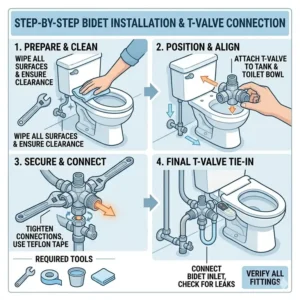
Many buyers factor a $200 plumber visit into their budget. Unless you need an electrician to install a new GFCI outlet, you do not need a professional to install a bidet seat. The standard setup involves turning off the wall valve, unscrewing the toilet tank hose, inserting the provided T-valve, and hand-tightening the hoses back on. It takes 15 minutes and a crescent wrench.
Continuous vs. Reservoir Heating: An Engineering Deep Dive
To truly understand what you are paying for, we need to look at the thermodynamics of how a bidet water warmer operates.
The Reservoir Tank (Thermal Mass)
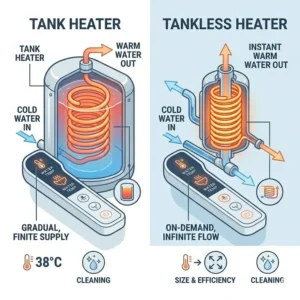
A tank heater works exactly like the traditional hot water heater in your basement, just miniaturized. It holds a volume of water and uses a low-wattage element to maintain the target temperature.
-
The Advantage: Because the water is pre-heated, it relies on the internal thermal mass. When you initiate a wash, the water hitting your skin is instantly warm.
-
The Disadvantage: Once you drain that tank, cold water rushes in to replace it, plunging the overall temperature. It then takes 3 to 5 minutes for the small heating element to recover.
The Instant Heater (High-Amp Draw)
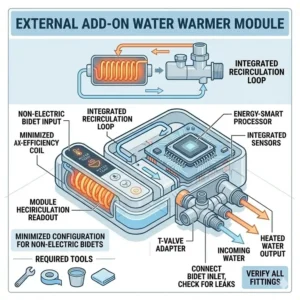
Instant heaters utilize a ceramic or metallic core with highly conductive coils. When water flow is detected, the unit draws a massive spike of electricity to superheat the core in milliseconds.
-
The Advantage: Endless hot water. You could sit there for twenty minutes, and the temperature would not fluctuate. It is highly energy-efficient because it uses zero power for heating while idle.
-
The Disadvantage: The flow rate (water pressure) must be tightly restricted. If water flows over the element too fast, it won’t have time to absorb the heat. This is why instant-heat bidets generally have lower maximum water pressure than tank models.
For a deeper understanding of how modern plumbing appliances utilize flow restriction for energy efficiency, the U.S. Environmental Protection Agency’s WaterSense guidelines provide excellent insights into water conservation tech.
Long-Term Cost & Total Cost of Ownership
Is a bidet water warmer an expensive luxury? Let’s break down the total cost of ownership over a 5-year lifespan.
Electricity Consumption
People often worry about their electric bill spiking. Based on energy averages, an instant-heating bidet draws practically no power on standby. A family of four using an instant-heat model will see their electricity bill go up by roughly $1.50 to $2.00 a month. A tank heater, which constantly cycles on and off to keep the reservoir warm 24/7, will cost slightly more—around $3.00 to $4.00 a month. Over five years, that is a negligible difference.
Toilet Paper Savings
This is where the ROI (Return on Investment) becomes apparent. The average American uses roughly 140 rolls of toilet paper per year. For a household of four, that’s 560 rolls. At an average cost of $1.00 per high-quality roll, that is $560 a year. A good bidet water warmer reduces toilet paper consumption by 75% to 80% (you only need a few squares to pat dry, or none at all if you use the air dryer). That is a savings of over $400 a year. A mid-range $500 bidet literally pays for itself in 15 months.
Hidden Maintenance Costs
When budgeting, factor in the cost of inline water filters. While not strictly mandatory, they are highly recommended to protect the internal valves and heating elements from calcium buildup. At roughly $15 every six months, expect to spend $30 a year on preventative maintenance. If you
skip this, you run the risk of blowing out a $150 heating core in year three. (You can read more about the impact of hard water on appliances via the USGS Water Science School).
Features That Actually Matter (And Those That Don’t)
Marketing departments love to pad spec sheets with acronyms and buzzwords. Here is my unfiltered take on what you should prioritize, and what you can safely ignore.
Crucial: Adjustable Nozzle Positioning
Everyone’s anatomy is slightly different, and we all sit on the toilet uniquely. If a bidet does not have adjustable nozzle positions (allowing the wand to move forward and backward via the remote), you will find yourself doing a seated hula-dance to get clean.
Crucial: Stainless Steel Nozzles
Plastic (ABS) nozzles are porous at a microscopic level. Over time, bacteria can cling to them, and they are prone to staining. Stainless steel is naturally antimicrobial, easier to clean, and far more durable against hard water scaling.
Ignore: High-Speed Warm Air Dryers
I have tested hundreds of bidets, and I have yet to find a warm air dryer that works perfectly in under three minutes. Most are underpowered. Unless you have severe mobility issues and absolutely cannot use toilet paper to pat dry, the air dryer is a feature you will try twice and then abandon because it takes too much time.
Ignore: Auto-Open/Close Lids in Small Bathrooms
Premium models often feature a radar sensor that automatically opens the lid when you approach. In a massive master bathroom, this is a cool parlor trick. In a standard 5×8 foot bathroom, the lid will open every single time you walk past the toilet to brush your teeth at the sink. It becomes maddening incredibly fast.
Health and Hygiene Advantages
Beyond basic cleanliness, the use of warm water for personal hygiene has documented biological benefits. According to various medical professionals and anatomical literature (you can explore the history and health benefits of bidets on Wikipedia), the use of a bidet water warmer is highly recommended for several specific conditions.
For individuals suffering from hemorrhoids, the abrasive friction of dry toilet paper exacerbates micro-tears and inflammation. A warm water wash provides non-abrasive cleansing while stimulating local blood flow, which aids in healing. Furthermore, for postpartum recovery, the gentle, aerated warm water from models like the Brondell or TOTO acts much like a sitz bath, providing soothing relief to traumatized tissue without the risk of bacterial cross-contamination associated with traditional wiping.
✨ Don’t Miss These Exclusive Deals!
🔍 Ready to transform your daily routine? Click on any highlighted item to check current pricing and availability. Say goodbye to scratchy paper and hello to warm, soothing hygiene!
Conclusion
Transitioning to a bidet water warmer is one of the rare home upgrades that dramatically improves your daily quality of life while actively paying for itself in reduced consumable costs. The days of freezing cold splashes and endless rolls of scratchy paper are over.
If you are outfitting a busy family bathroom, the hybrid power of the Bio Bidet Bliss BB2000 will never let you down. For those seeking the pinnacle of zero-maintenance luxury, the continuous heat and electrolyzed sanitization of the TOTO WASHLET S500e remain unmatched. And if you are just looking to step into the world of smart hygiene without breaking the bank, the SmartBidet SB-1000 proves that comfort doesn’t have to be prohibitively expensive.
Remember to measure your bowl, check your electrical outlet situation, and be honest with yourself about your water pressure preferences. By matching the right heating technology to your specific household needs, you’ll wonder how you ever lived without one.
FAQs
❓ What is a bidet water warmer?
✅ A bidet water warmer is an internal electronic heating element—either a reservoir tank or an instant ceramic heater—built into a bidet seat. It raises tap water to a comfortable 90°F–100°F before it reaches the spray nozzle, ensuring a soothing wash…
❓ Do I need a plumber to install an electronic bidet?
✅ No. If you have a standard GFCI electrical outlet near your toilet, installation is a 15-minute DIY job. It involves turning off the water valve, attaching a provided T-adapter, and tightening the hoses by hand or with a basic wrench…
❓ How much electricity does a bidet water warmer use?
✅ Very little. Instant-heating models draw peak power for only a few seconds during use and consume practically nothing on standby. Most users report an increase of only $1.50 to $3.00 on their monthly electric bill…
❓ Will a bidet seat fit my existing toilet?
✅ Most likely, provided you measure correctly. You must determine if your bowl is “Round” or “Elongated” and purchase the matching seat size. However, 1-piece toilets with a deep “French curve” may require specific low-profile bidet models…
❓ How do I clean and maintain the bidet nozzles?
✅ Most modern units feature a self-cleaning function that flushes the nozzles before and after use. For manual cleaning, use a soft toothbrush and mild soap. Avoid harsh bleach, and use an inline water filter to prevent hard water mineral buildup…
Recommended for You
- Bidet for men: 7 Best High-Tech Upgrades for Superior Cleanliness
- Bio Bidet vs Brondell: 7 Best Bidet Seats for 2026 Compared
- Artistic Bidet for Exclusive Bathrooms: 7 Stunning 2026 Luxury Picks
Disclaimer: This article contains affiliate links. As an Amazon Associate, I earn from qualifying purchases. If you purchase products through these links, we may earn a small commission at no additional cost to you.
✨ Found this helpful? Share it with your friends! 💬🤗
[addtoany]
